

Florida Legislature approves DeSantis property tax cut plan for November ballot
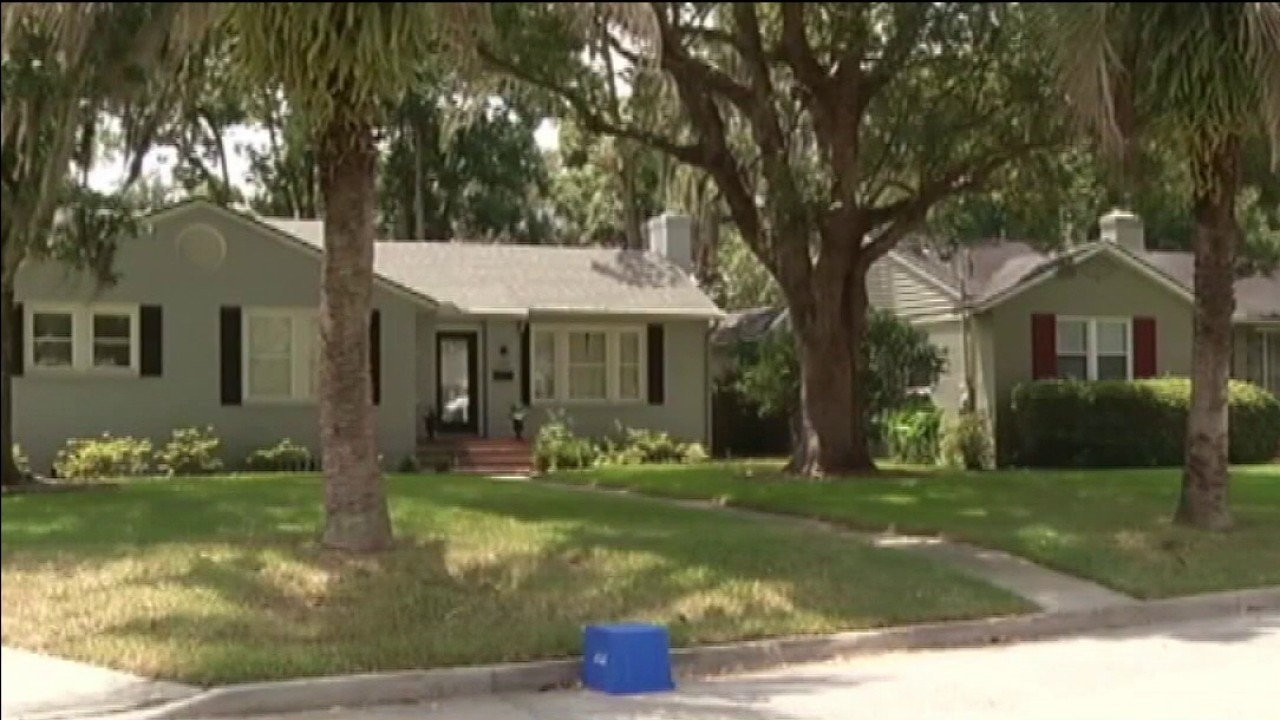
Bay Area impact of property tax cut amendment
Florida lawmakers on Tuesday approved a sweeping tax cut for homestead property owners pushed by Gov. Ron DeSantis, sending it to the November ballot. FOX 13's Kylie Jones reports.
TALLAHASSEE, Fla. - Florida lawmakers on Tuesday approved a sweeping tax cut for homestead property owners pushed by Gov. Ron DeSantis, sending it to the November ballot.
The approved ballot measure would eliminate property taxes for the majority of Floridians over time.
Florida property tax ballot initiative
What we know:
The measure increases the existing $50,000 exemption for homestead properties to $150,000 starting in 2027, and it increases to $250,000 in 2028. The exemption, though, doesn’t apply to school taxes, after lawmakers changed DeSantis’ plan Monday to protect districts from drastic cuts.
The constitutional amendment (HJR 1F) needs 60% support from voters to take effect. If it passes into law, the measure is expected to cut local government revenue across the state by more than $8.4 billion a year.
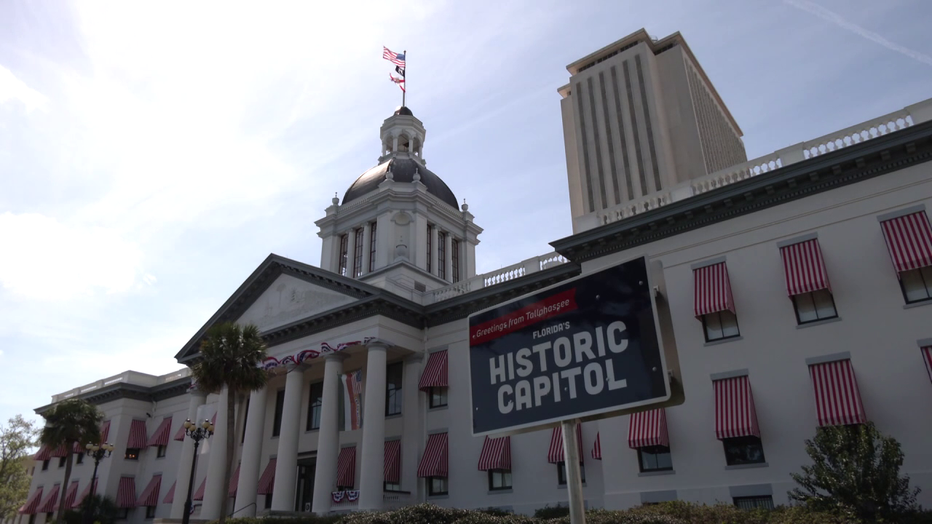
The Historic Capitol building stands in Tallahassee, where state lawmakers and local leaders are deeply divided over the long-term impact of expanding the homestead exemption.
"I'm proud of the opportunity that we are giving the voters by letting them decide if this is something that's going to come to fruition or not," House Speaker Daniel Perez, R-Miami, told reporters after the two-day special session. "And if it doesn't, I am still going to say that this was the right decision, that we produced a good product, and that I would do it all over again."
House and Senate approve measure
In votes that mostly followed party lines, the House voted 75-26 on the ballot measure, and the Senate voted 30-9. Three Democratic senators, Mack Bernard of West Palm Beach, Daryl Rouson of St. Petersburg, and Barbara Sharief of Miramar voted for the measure.
Rep. Nathan Boyles, R-Baker, and Patt Maney, R-Shalimar, were the only Republicans voting against the constitutional amendment.
Some Republicans expressed angst over the vote amid concerns about cuts to local governments in their area, but ultimately approved it.
"This issue has created heartburn for me from day one, because I’m getting it from both sides," said Sen. Ed Hooper, R-Clearwater.
Hooper, who is the chairman of the Senate Appropriations Committee and is retiring this year, said he received 27 text messages since debate began Tuesday morning. Local elected officials were against the proposal while other constituents told him to vote yes, Hooper said.
Democrats warn of major impacts on local governments
The other side:
Most Democrats and local government officials argued the monumental changes to the state’s tax structure will bankrupt some cities and counties, cripple water management districts and other special districts, shift tax burdens to renters and businesses, and regressively hit Floridians with fees for basic services.
"When the bill comes due, it won’t be paid by Tallahassee," said Sen. Lavon Bracy Davis, D-Ocoee. "It will be paid by your city, your county, your neighborhood school, your library, your community. This proposal does not eliminate costs, it simply moves them. It is not tax relief, it is a tax shift."
Perez said he would have preferred the discussion to have occurred during the regular session, when the House settled on a measure in February that sought to eliminate most non-school homestead property taxes.
"We put up a select committee. We had the bills, the proposals run through the process. That was never reciprocated by our friends in the Senate, and it wasn't held in high regard by the governor," Perez said.
How DeSantis' property tax proposal evolved
The backstory:
A little more than a year ago, Perez and DeSantis proposed competing tax restructuring plans, with the House plan favoring a lower state sales tax rate. The House later rolled out a series of potential property tax proposals. However, members of the Senate expressed concerns about the fiscal impacts to mostly rural, fiscally constrained counties.
DeSantis said his plan would eliminate property taxes for about 60% of Floridians. The plan also slashes the annual assessment cap on non-homestead properties, including second homes and businesses, from 10% to 5% yearly increases.
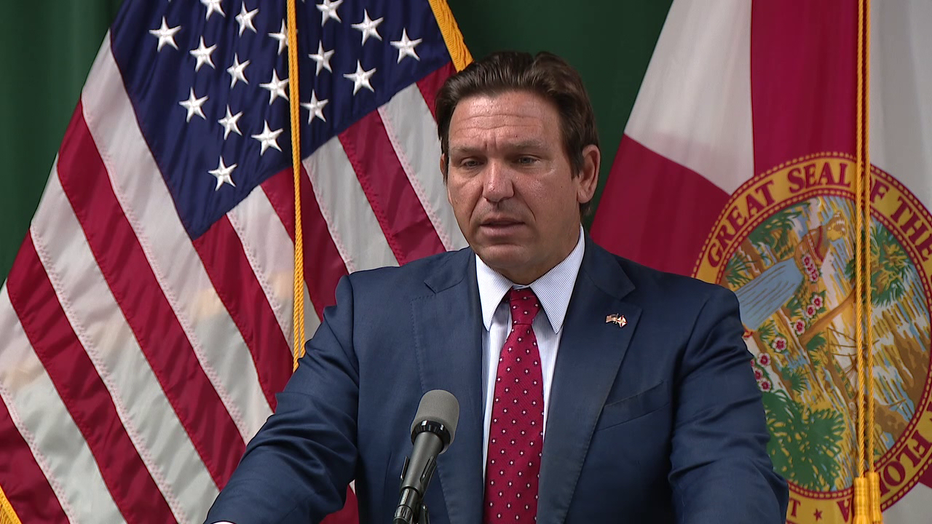
In a released statement, Senate President Ben Albritton, R-Wauchula, expressed gratitude to DeSantis for "leading the conversation on cutting property taxes and putting forward this robust proposal."
Legislative changes
Dig deeper:
On Monday, Republicans in both chambers amended the proposal put forward by DeSantis to protect school districts and allow local governments to use property taxes to fund constitutional offices, such as supervisors of elections, tax collectors and property appraisers.
Under the measure, cities and counties would be restricted to spending property tax revenues on "core services," including schools, police, firefighters, infrastructure and the environment. But constitutional offices were left out of the initial proposal.
"It lowers the tax benefit for individuals, because you would still pay the portion of your property taxes that are related to schools," Hillsborough County Property Appraiser Bob Henriquez said.
However, Bay Area municipalities say that schools, police and fire services could still lose some funding if the overall pot of revenue is smaller.
Other services like parks, libraries, the Southwest Florida Water Management District and environmental resources could lose millions of dollars.
"If and when this proposal passes, yes, local governments will have to be in a position to make those tough decisions on how they are going to balance their budgets," Rep. Daniel Perez said.
Republicans also removed the establishment of a fund that would purportedly assist local governments with lost revenue. But the initial proposal from DeSantis’ office didn’t include money for the fund or outline how it was to be distributed.
Long-term impacts
What they're saying:
"Over the past several years, local governments have been the beneficiary of the days of milk and honey," State Sen. Don Gaetz said. "They have gotten extraordinary increases in the amount of money they have available to spend."
Bay Area municipalities say these proposed cuts would shift the burden onto other services and areas of their budgets.
"And it's as though in your own individual household, you were told that you no longer have 30, 40, 50% of your expected revenue going forward, and you just have to figure it out," Henriquez said.
Henriquez says that over the course of a decade, Hillsborough County could potentially lose billions of dollars.
"Are there ways that their budgets can take a haircut?" Henriquez said. "Absolutely, and we all should, and we have in this office, over the course of time. But I think that there will be a shortfall."
Hillsborough budget impact
By the numbers:
The Hillsborough County Property Appraiser's Office shared a preliminary analysis of the proposed tax cuts, using the 2025 tax roll.
- $478 million: The estimated revenue loss for Hillsborough County in 2028 alone due to the increased homestead exemption.
- 59%: The percentage of homesteaded properties in Hillsborough County that would owe zero property taxes under a $250,000 exemption.
- $83 million: Additional projected losses for Hillsborough County stemming from the lowered cap on non-homestead properties.
"That's a fundamental shift of how we will fund services at the local level," Henriquez said.
Local government services
What we don't know:
Local municipalities say there could be a future discussion to shift the oversight of certain local services that are deemed non-core essential to the state.
Opponents argue these changes could shift the tax burden directly to renters and businesses to make up for the shortfalls.
City and county future funding questions
What's next:
Lawmakers anticipate future legislators will have to address local government funding.
Rep. Allison Tant, D-Tallahassee, said the change will result in cities and counties cutting back or consolidating public safety and other services.
"They're worried about loss of autonomy, independence, and losing their identity," Tant said. "They are worried about becoming wards of the state and essentially be treated like welfare recipients."
For the second day, Democrats unsuccessfully tried to amend the bill to allow water management districts to use property tax revenue, to use state dollars to cover lost revenue for senior programs, law enforcement, corrections and veterans services, and to prohibit the use of public money to advertise the ballot initiative.
The measure would also lower the cap on annual assessment increases for non-homestead properties, which include vacation and investment homes and commercial properties, from 10% to 5%.
Residency verification rules
Starting after Jan. 1, 2027, first-time homeowners would have to display five years of residency to qualify for the new super exemption. Until they qualify, they would receive the current exemption that lifts local government and school district taxes on the first $25,000 of the appraised values of their primary properties and from non-school taxes on the value between $50,000 and $75,000.
The Source: Information for this story was gathered from News Service of Florida, an interview conducted with the Hillsborough County Property Appraiser, as well as statements from State Rep. Daniel Perez and State Sen. Don Gaetz from Tuesday's legislative special session.