

Florida death row: Gov. DeSantis signs 18th death warrant in 2026
Courtesy: Florida Department of Corrections
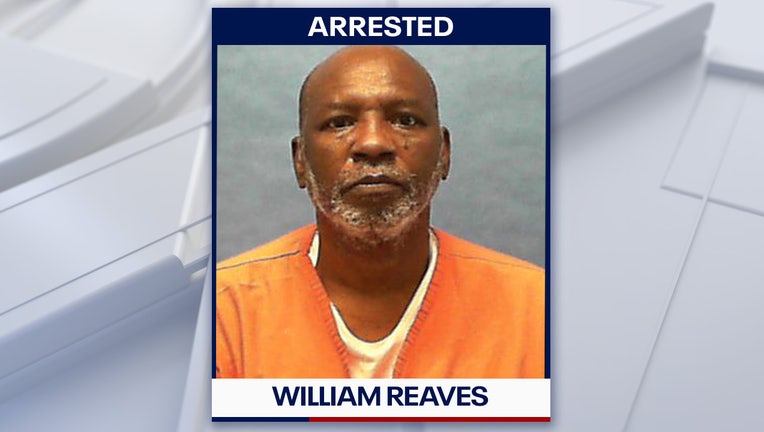
STARKE, Fla. - Gov. Ron DeSantis has signed his 18th death warrant this year, setting an Oct. 20 execution date for William Reaves, who was convicted of killing an Indian River County sheriff's deputy in 1986.
Florida set a modern record for executions in 2025, when Gov. Ron DeSantis issued death warrants that ultimately led to 19 executions—the most in a single year in the state's modern death-penalty era. The previous record was eight executions, set in 2018.
If all scheduled executions proceed, Florida's total number of executions in 2026 will rise to 18 under Gov. Ron DeSantis.
Florida death penalty warrant
What we know:
1986: Murder of Indian River County Sheriff's Deputy Richard Raczkoski
Vero Beach, Florida
Sept. 23, 1986: According to court documents, Deputy Raczkoski responded to a 911 call at a convenience store near Vero Beach and encountered 37-year-old William Reaves. Records state Reaves had called 911 from a payphone because he did not have money for a cab. Deputy Raczkoski called the dispatcher to order a cab for Reaves. While they were talking, a gun fell from Reaves' shorts. Documents say Deputy Raczkoski put his knee on the weapon, but Reaves seized the gun and pointed it at Raczkoski's face. As the deputy backed away and attempted to draw his weapon, Reaves warned, "I wouldn't do that if I were you." Deputy Raczkoski turned and ran, but Reaves opened fire, hitting the deputy four times. Court records state Reaves fled to a friend's house; the friend later told police that Reaves was high on cocaine, panicked, and confessed to shooting the deputy.
Sept. 1987: Reaves was convicted of first-degree murder and sentenced to death. Though this conviction was overturned by an appeal in 1991.
1992: Following a retrial, he was convicted of first-degree murder and sentenced to death again.
Sept. 18, 2026: Gov. Ron DeSantis signed Reaves' death warrant.
Oct. 20, 2026: Reaves, now 77, is scheduled to be executed on Oct. 20, 2026.
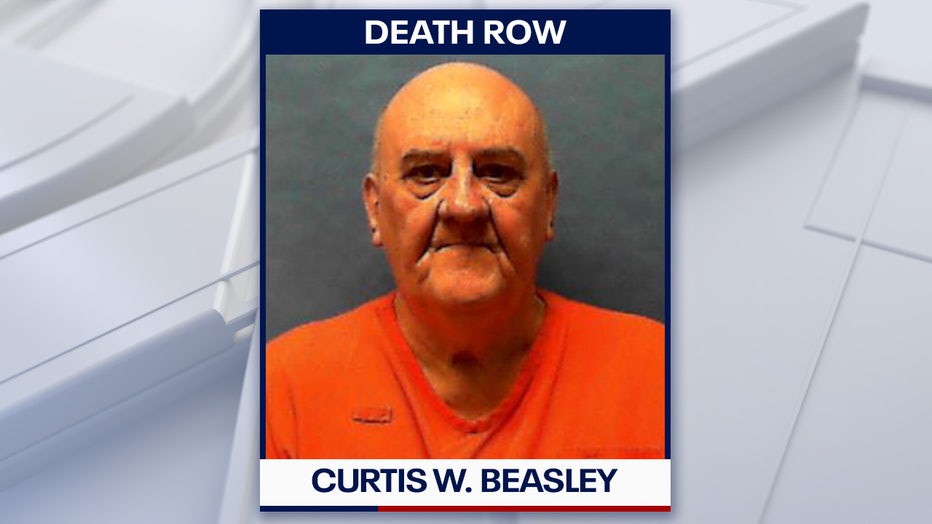
The next inmate to be executed in Florida is Curtis W. Beasley on Sept. 29.
Courtesy: Florida Department of Corrections
1995: The Case of Curtis W. Beasley
Polk County, Florida
August 21, 1995: Curtis W. Beasley, 46, was convicted of bludgeoning 62-year-old Carolyn Monfort to death inside her Polk County home. Court records state that Beasley had been staying at the residence while performing maintenance work at the apartments Monfort managed.
Two days later: Monfort’s daughter discovered her mother’s body in the laundry room after not hearing from her for two days. Investigators located a bloody hammerhead wrapped in two dishtowels near the body.
1995: Court records show Beasley stole Monfort’s car and money before fleeing to Alabama. Several months later, authorities found him living in a motel under an assumed name.
1998: Beasley was sentenced to death, along with 15 years for robbery and five years for Grand Theft Auto. Documents show that Beasley maintained his innocence throughout the investigation, trial and sentencing process.
August 26, 2026: Gov. Ron DeSantis signed Beasley’s death warrant.
Sept. 29, 2026: Beasley, now 77, is scheduled to be executed on Sept. 29.
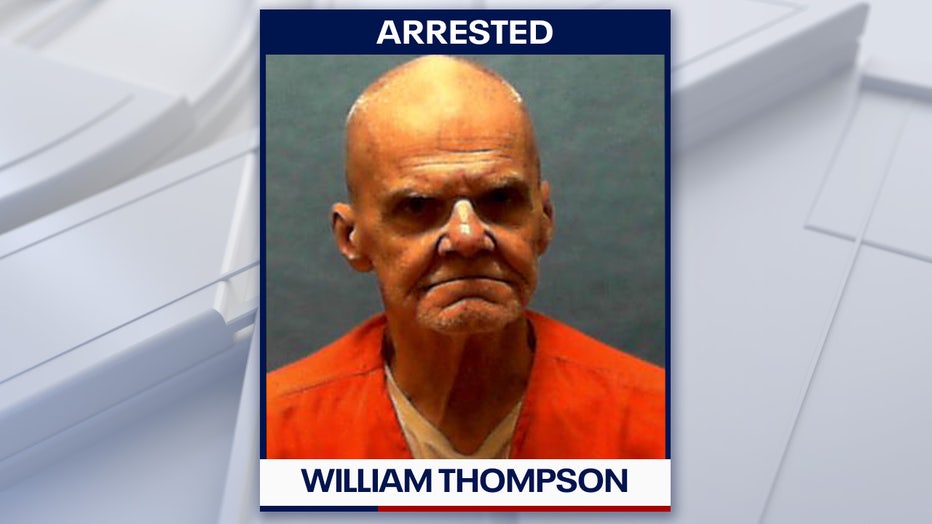
Following Beasley, the next inmate to be executed is William Lee Thompson on Oct. 13.
Courtesy: Florida Department of Corrections
1976: Murder, Kidnapping and Sexual Battery of Sally Ivester
Miami, Florida
March 30, 1976: According to court documents, William Lee Thompson, 24, and an accomplice, Rocco Surace, were in a motel room with Sally Ivester and another woman. Thompson and his accomplice beat and tortured Ivester after she was unsuccessful in obtaining $200 to $300 from her mother.
Reports state that the abuse was temporarily paused when Ivester was taken to a phone booth and instructed to ask her mother for more money. After the call, Thompson and his accomplice returned with Ivester to the motel room, where the men continued to beat and torture her. Court documents state that approximately 80% of Ivester's body was covered in deep bruises, cuts and burns.
1978: Thompson was convicted of first-degree murder, kidnapping and sexual battery and sentenced to death.
1978–2026: Court documents show that Thompson pursued multiple appeals throughout the years. His sentence was overturned, but reinstated in different trials. Records show that Thompson continuously filed for appeals.
Sept. 11, 2026: Thompson's death warrant was signed.
Oct. 13, 2026: William Lee Thompson, 74, is scheduled to be executed on Oct. 13.
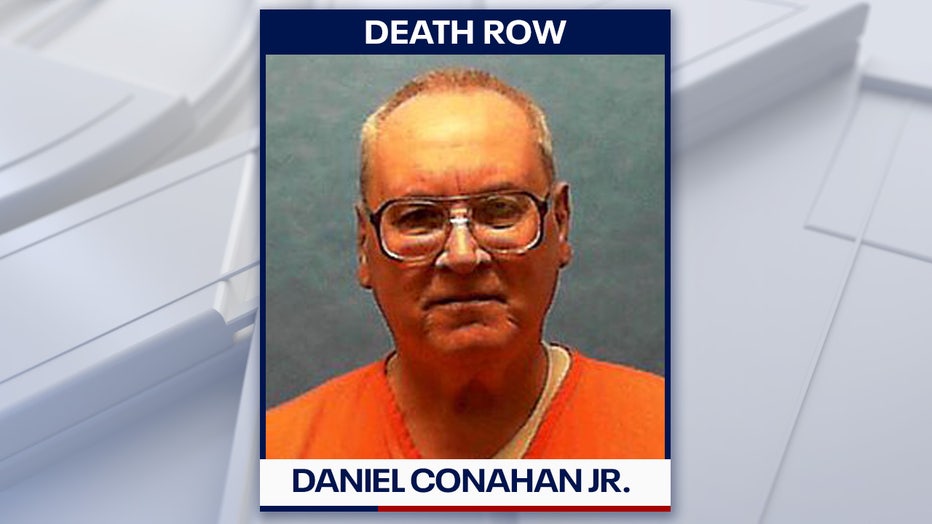
The most recent inmate to have been executed was Daniel Conahan Jr, who died via lethal injection on Sept. 10. His death marked the 15th execution in Florida this year.
Courtesy: Florida Department of Corrections
1996: The "Hog Trail Killer" Case of Daniel O. Conahan Jr.
Charlotte County, Florida
- April 16 – 17, 1996: Daniel Owen Conahan Jr. lured 21-year-old Richard Alan Montgomery to a remote area in Charlotte County under the pretense of paying him for nude photos. Montgomery’s body was found in carpet padding the next day.
- Aug. – Dec. 1999: Conahan was convicted of first-degree murder and kidnapping on Aug. 17 and sentenced to death on Dec. 10.
- Jan. 2003: The Florida Supreme Court affirmed Conahan's conviction and death sentence.
- Aug. 11, 2026: DeSantis signed Conahan's death warrant.
- Sept. 10, 2026: Conahan, now 72, was scheduled to be executed by lethal injection.
Why Capital Cases Take Decades
Big picture view:
The decades-long gap between conviction and execution in Florida is driven by a multistep legal process designed to prevent unlawful executions:
- Direct Appeals: Sentences are automatically reviewed by state high courts to check for trial errors.
- Post-Conviction Reviews: Defense attorneys investigate issues outside the original record, such as attorney performance or new evidence.
- Federal Review: Inmates can request federal court reviews regarding constitutional rights violations.
- Evolving Case Law: Changes to state or national legal standards often trigger re-evaluations of older cases.
- Warrant Dynamics: Governors control when a warrant is signed, which typically triggers a final round of emergency legal appeals before an execution date is finalized.
Inside Florida Death Row
Dig deeper:
- Florida executions were considered unconstitutional from 1972 to 1976.
- Florida executions resumed in 1979.
- In January 2000, lethal injection was approved as an alternative method of execution.
- Death row inmates are authorized to socialize with other inmates during dayroom and recreation activities. They have snacks, radios and a 13-inch television, although they do not have cable television or air conditioning. While on Death Watch, inmates may have radios and televisions positioned outside their cell bars.
- Death row inmates wear orange T-shirts to distinguish them from other inmates; however, they wear the same blue pants as regular inmates.
- On the day of the execution, the inmate will be allowed to request a last meal, and a nonalcoholic drink costing no more than $40 is available. The meal is provided by the institution and approved by the food service director. The inmate will be escorted to the shower and then returned to their cell, where they will be issued appropriate clothing.
- After the execution, the inmate's body will be transported to the medical examiner's office in Alachua County.
- The executioner is a private citizen who is paid $200 per execution. State law allows the executioner's identity to remain anonymous.
The Source: The information in this story was gathered from court documents, legal records, and historical case filings detailing Florida Supreme Court rulings, death warrants authorized by Gov. Ron DeSantis, state execution schedules and the Florida Department of Corrections.